Remember 10 years ago when everyone said: "Learn Java — it's stability for life"?
And they were right. Java developers earn good money. Get offers from top companies. Build careers. And they will continue to. Java isn't going anywhere. Backend, Enterprise, Android — it's all alive and will live for decades more.
 But the world has changed.
In 2025, programming isn't just Java, Python, or JavaScript anymore. It's also AI applications with billion-user audiences. Mobile development with modern languages. Cloud systems processing petabytes of data.
At CodeGym, we always go where the industry is heading.
Today we're announcing 4 new courses launching in late 2025 — early 2026. These courses will open doors to fields with the highest demand and biggest salaries right now.
And throughout 2026, we'll launch many more courses. This is just the beginning.
Get comfortable. This is going to be interesting.
🤖 ChatGPT Apps — you're either in early or you're late
What even is this?
Picture this: you open ChatGPT and type "Spotify, make me a party playlist".
A second later, an app opens right in the chat with a ready playlist. You can listen to tracks, add them to your library, share with friends. All right inside ChatGPT.

Or you write: "Booking, find me a hotel in Paris for November 21-24 with parking and rating above 8.5".
And you get not just a list of links, but a full-featured app with hotel options, prices, photos and a booking button.

Here's how it works live:
Video from OpenAI — ChatGPT Apps in action
App Store 2.0, except 80 times bigger
If you haven't been living under a rock for the past 15 years, you know what happened when the App Store launched on iPhone in 2008.
Launch numbers:
- 10 million iPhone users
- Thousands of developers rushed to create apps
- First apps downloaded millions of times
What happened next:
- Instagram — sold to Facebook for $1 billion
- Angry Birds — 1+ billion downloads, company valued at hundreds of millions
- Uber — started with iOS app, now $80+ billion
- Spotify, Airbnb, Tinder — all started with App Store
Developers who were first to create quality apps made millions. Some made billions.
Now pay attention.
ChatGPT has 800 million active users.
That's 80 times more audience than iPhone had when App Store launched.
And GPT Store (the app store for ChatGPT) is just opening up.
This is the pioneer moment.
Why this isn't just hype

Skeptics will say: "Yeah, another AI fad. It'll pass in a year".
It won't. Here's why.
1. This isn't a new technology — it's a new paradigm.
ChatGPT Apps changes how people interact with services. You don't need to download 20 apps, remember 20 passwords, switch between 20 windows.
You just say what you need — and get the result.
2. The audience already exists.
Mobile app developers fought for years for each user. Ads, ASO, marketing, millions of dollars invested just to get downloaded.
ChatGPT Apps audience — 800 million people — is already waiting.
3. Low barrier to entry, but high quality bar.
You can create a simple ChatGPT app in a couple days. But creating a truly useful app that solves a real problem and people will actually use — that's an art.

And that's exactly what we teach.
What's the complexity?

Someone might say: "Okay, sounds cool. I'll go read a couple articles and make my app".
Nope. Won't work.
Here's what you need to know:
- MCP (Model Context Protocol) — this isn't just an API. It's a protocol that defines how your app interacts with AI. It has its own rules, patterns, limitations.
- Apps SDK — toolkit from OpenAI. Documentation exists, but it's written for those who already understand AI development. For beginners — it's a dark forest.
- Agents SDK — creating AI agents that can perform complex tasks autonomously.
- ACP (Agentic Commerce Protocol) — protocol for commercial transactions through AI applications.
- Interfaces (Inline, Fullscreen, Voice) — different types of user interaction with the app right in ChatGPT.
- AI app paradigm — this isn't regular development. Understanding how AI interprets requests, how to structure data for AI, how to handle natural language ambiguity is crucial.
- External service integration — your app needs to communicate with real APIs: Spotify, Booking, banks, CRM systems. And do it through AI.
- Monetization through GPT Store — how to earn with your apps? What models work? How does pricing work?
You could spend months learning on your own.
Or you can take a course where everything's broken down step by step, with practice and real projects.
What we're building
At CodeGym, we're creating the world's first large-scale production-ready course on ChatGPT Apps development.

We have insider knowledge of how everything will work. We already have platform access and tested app creation in practice. Our team studied all documentation, analyzed the architecture, created first apps and understands all the pitfalls.
We're translating this experience into a course.
What you'll get:
- Understanding ChatGPT Apps architecture from scratch
- Hands-on practice with MCP and Apps SDK
- Building real apps with integrations
- Monetization skills through GPT Store
- Portfolio of ready projects
When GPT Store officially opens — you'll be ready.
While others are figuring out the documentation, you'll already be publishing apps and earning.
📚 Course structure:
Module 1: ChatGPT Apps basics and ecosystem
- What ChatGPT Apps is and how the platform works
- MCP (Model Context Protocol) — the interaction foundation
- Development environment setup
- Your first simple app
Module 2: Apps SDK and Agents SDK
- Working with Apps SDK — developer tools
- Creating AI agents with Agents SDK
- Interface types: Inline, Fullscreen, Voice
- Handling user requests through AI
Module 3: Integrations and ACP
- Connecting external APIs (Spotify, Booking, payments)
- ACP (Agentic Commerce Protocol) for commerce
- Working with real-time data
- Error handling and edge cases
Module 4: Monetization and publishing
- GPT Store — how the app store works
- AI app monetization models
- Preparing for publication
- Marketing and promoting your app
📱 Kotlin — your ticket to mobile development

Finished Java on CodeGym? Great. You know OOP, understand JVM, can write backend.
What's next?
Next — Kotlin. Google's official language for Android development.
Why exactly Kotlin?
1. Google said: "Kotlin first"
In 2019, Google announced Kotlin as the preferred language for Android. All new libraries, frameworks, code examples — everything's in Kotlin.
2. Modern syntax
Kotlin is Java, but without the pain.
Instead of:
public class User {
    private String name;
    private int age;

    public User(String name, int age) {
        this.name = name;
        this.age = age;
    }

    public String getName() { return name; }
    public void setName(String name) { this.name = name; }
    public int getAge() { return age; }
    public void setAge(int age) { this.age = age; }
}
You write:
data class User(var name: String, var age: Int)Cleaner code. Less boilerplate. More productivity.
3. 100% Java compatibility
All your Java knowledge works in Kotlin. All Java libraries available. You can write Kotlin and Java in the same project.
4. Not just Android
Kotlin is used for:
- Android apps
- Kotlin Multiplatform (iOS + Android + Web from one codebase)
- Backend with Spring Boot
- Desktop applications
5. Salaries
Average Kotlin developer salary is 30% higher than Java Junior.
Why? Because demand is huge, supply is small. Kotlin is relatively young — there aren't enough qualified developers.
Who uses Kotlin
Top companies worldwide:
- Google — all of Android
- Netflix — mobile apps
- Airbnb — migrated from Java to Kotlin
- Pinterest — fully on Kotlin
- Uber — most Android code
- Trello — complete migration to Kotlin
- Coursera — Android on Kotlin
- Slack — mobile apps
They're all looking for Kotlin developers. Constantly.
What's in the course
We'll structure the course so the transition from Java to Kotlin is as smooth as possible.
Program:
- Kotlin syntax for Java developers
- Null safety and error handling
- Coroutines (modern multithreading)
- Android development with Jetpack Compose
- Android app architecture
- Working with APIs and databases
- Real projects for your portfolio
📚 Course structure:
Module 1: Kotlin basics
- Syntax and core constructs
- Higher-order functions and lambdas
- Null safety — forget NullPointerException
- Data classes and sealed classes
Module 2: OOP and functional programming
- Classes, objects, interfaces in Kotlin
- Extension functions — extend any class
- Delegation and property delegates
- Functional style in Kotlin
Module 3: Coroutines and asynchrony
- Introduction to coroutines
- Suspend functions and coroutine scopes
- Flow for data streams
- Practical usage patterns
Module 4: Android development
- Jetpack Compose — modern UI
- MVVM and Clean Architecture
- Working with REST API and Room Database
- Building a complete app
🚀 Go — the language for clouds and microservices
Go (or Golang) is a language from Google. It was created to solve one big problem: how to write fast, reliable, and scalable code?
Why Go?
1. Simplicity
Go is one of the easiest languages to learn. The language spec fits on 50 pages (for comparison: Java has hundreds).
If you know Java — you'll master Go in a couple weeks.
2. Speed
Go compiles to native code. Performance is comparable to C++, but writing is much easier.
3. Concurrency out of the box
Goroutines are lightweight threads. You can run a million goroutines on a regular laptop.
This is perfect for microservices, APIs, high-load systems.
4. Cloud-native
Docker is written in Go.
Kubernetes is written in Go.
Prometheus, Terraform, etcd — all in Go.
If you want to work with clouds and DevOps — Go is essential.
Salaries and demand
Average Go developer salary worldwide: $80,000 - $120,000
According to Stack Overflow and other research:
- Junior: $60,000 - $80,000
- Middle: $90,000 - $120,000
- Senior: $130,000+
The problem is there are very few Go developers.
Companies are ready to hire people with minimal experience and grow them quickly. Because finding a ready Senior Go developer is a quest.
Who uses Go
Worldwide:
- Google (creators)
- Uber (microservices)
- Netflix (high-load systems)
- Dropbox (rewrote Python code to Go, performance increased dramatically)
- Twitch (processing millions of streams)
- Soundcloud (backend infrastructure)
- Medium (services and APIs)
- Twitter (parts of infrastructure)
Everyone's building microservice architectures. Everyone's looking for Go developers.
What's in the course
Program:
- Go basics from scratch
- Goroutines and channels (concurrency)
- Creating REST APIs
- Working with databases
- gRPC and microservices
- Docker and Kubernetes
- Testing and profiling
- Industry best practices
📚 Course structure:
Module 1: Go basics
- Syntax and language features
- Data types, structs, interfaces
- Packages and modules in Go
- Error handling the Go way
Module 2: Concurrency in Go
- Goroutines — lightweight threads
- Channels for communication
- Select and multiplexing
- Concurrency patterns
Module 3: Backend development
- REST API with net/http and Gin
- Working with PostgreSQL and MongoDB
- Middleware and authentication
- API testing
Module 4: Microservices and DevOps
- gRPC — modern communication
- Containerization with Docker
- Deployment in Kubernetes
- Monitoring and logging
🔧 C++ — where every millisecond matters
C++ is the language for those who want control.
Control over memory. Control over performance. Control over every byte.
Why learn C++ in 2025?
Good question. There's Python, JavaScript, Java — why complicate things?
Simple answer: money and interesting challenges.
Where C++ is used
1. Games
99% of AAA games are written in C++.
Unreal Engine — in C++.
Unity allows writing plugins in C++.
Most game engines — C++.
Why? Because when you need to render millions of polygons per second at 60 FPS — every millisecond counts.
2. Embedded systems
Smartwatches, robots, cars, medical equipment — all on C++.
When a program runs on a microcontroller with 512 KB memory — Python isn't an option.
3. High-frequency trading
Banks and hedge funds use C++ for trading algorithms.
When a 1 microsecond difference = millions in profit, performance is critical.
4. System software
Operating systems, drivers, compilers, browsers (Chrome, Firefox) — largely in C++.
5. Graphics engines
Photoshop, After Effects, Maya, Blender — critical parts in C++.
Salaries
C++ developers are among the highest paid in the industry.
Average salaries worldwide:
- Junior: $60,000 - $80,000
- Middle: $100,000 - $130,000
- Senior: $150,000+
In gaming industry, Senior C++ developers earn $200,000+.
In high-frequency trading — even more.

Why so much?
Because C++ is hard. Not everyone can master it. High demand, low supply.
What's in the course
We won't scare you with pointers on day one.
We'll structure the course so you gradually get into C++, understand its logic, fall in love with its capabilities.
Program:
- C++ basics (syntax, data types)
- OOP in C++
- Memory management (pointers, smart pointers)
- STL (standard library)
- Multithreading
- Modern C++ (C++17, C++20, C++23)
- Optimization and profiling
- Real projects
📚 Course structure:
Module 1: C++ basics
- Syntax, data types, operators
- Functions and namespaces
- Introduction to OOP (classes, objects)
- Compilation and project building
Module 2: Memory management
- Pointers and references
- Dynamic memory (new/delete)
- Smart pointers (unique_ptr, shared_ptr)
- RAII — resource management
Module 3: STL and advanced C++
- Containers (vector, map, set)
- Algorithms and iterators
- Templates and metaprogramming
- Lambda functions
Module 4: Modern C++ and performance
- Move semantics and rvalue references
- Multithreading (threads, async, future)
- Modern features C++17/20/23
- Profiling and code optimization
♾️ How to get all these courses?
Okay, you've read about 4 new directions.
Maybe thinking: "Cool, but how do I get all this?"
Here's how.
We launched the ALL IN ONE subscription — access to all CodeGym courses. All existing and all future ones.
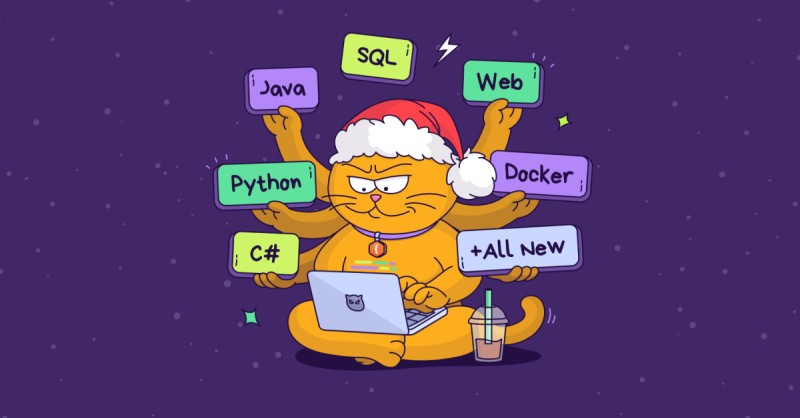
Buy ALL IN ONE now — you get:
- All current courses: Java, Python, C#, Web, SQL, Docker
- All new 2025-2026 courses: ChatGPT Apps, Kotlin, Go, C++, when they launch
- All course updates
- 2000+ lectures | 3600+ tasks
- AI mentor 24/7
- WebIDE for practice
Automatically. No extra charges.
When ChatGPT Apps launches — it just appears in your account.
When Kotlin is ready — it appears in your account.
And so on.
Right now ALL IN ONE has a special price.
Bottom line
2025 and 2026 are years of AI revolution in programming.
ChatGPT Apps is just the beginning. Kotlin, Go, C++ are tools for different directions, each paying well.
You can:
- Wait for the industry to change and then catch up
- Start learning now and stay ahead
Those who start now — will be ahead in a year.
And those who get ALL IN ONE at the special price — will learn with maximum benefit and get all new releases automatically.
Your choice.
P.S.
Not all topics in new courses are easy. Some are tough.
But here's the thing: difficult = expensive.
Easy stuff everyone does. Easy stuff pays little.
Difficult stuff that few can do — pays a lot.
ChatGPT Apps, Kotlin, Go, C++ — not for the lazy.
But if you know CodeGym, you know our approach:
We make learning interesting, simple, sequential. Gradually increasing complexity — step by step.
New courses will be the same. We're making your path as smooth as possible.
You won't drown in documentation. You won't get lost in theory. You'll be doing — practicing — getting results.
And if you're ready to invest — the industry will pay you back in full.
GO TO FULL VERSION