My first production incident happened in my third week on the job.
I built a feature in a day: an order history page with a date filter and pagination. On staging it flew. It passed code review. A month later, a message landed in the team chat: "why does the account page take forty seconds to load?"
Turned out my query filtered orders with YEAR(created_at) = 2026. On staging, the table had a thousand rows; in production, three million. There was an index on the date column, but because of the function wrapped around it, the database ignored the index and scanned the whole table. Every time someone opened the page.
My tech lead didn't lecture me. He just sent me a link to a free book about indexes and wrote: "Chapter two. Then we'll talk." We talked. It was the most useful conversation of my first year.
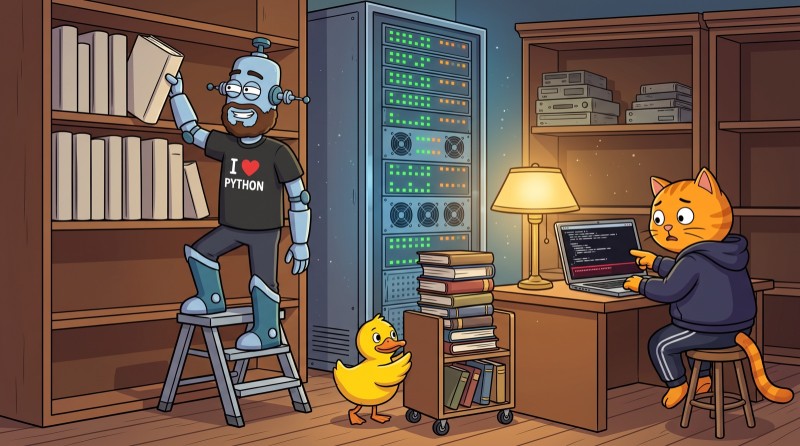
Today, queries like that are written by AI. And it writes them with more confidence than I had back then: fast, neat, with comments. The mistake hasn't gone anywhere — you just have to find it in someone else's code now instead of your own. And for that, you need to know where to look.
So here's a list — not of "the best books for programmers in general," but of books for specific backend problems. Each one covers a situation every backend developer runs into sooner or later. And each comes with a mistake AI makes regularly, which you'll start spotting at a glance once you've read the book.
The short version: the essential backend book is Martin Kleppmann's Designing Data-Intensive Applications; to get started, SQL Antipatterns and the free Use The Index, Luke are your best bet; and for system design interviews, people prepare with Alex Xu's System Design Interview.
"The query is slow in production": SQL and indexes
Almost every backend is a database with code around it. And most performance problems start not in the code but in the queries and the schema.
SQL Antipatterns, Volume 1 — Bill Karwin (2022)
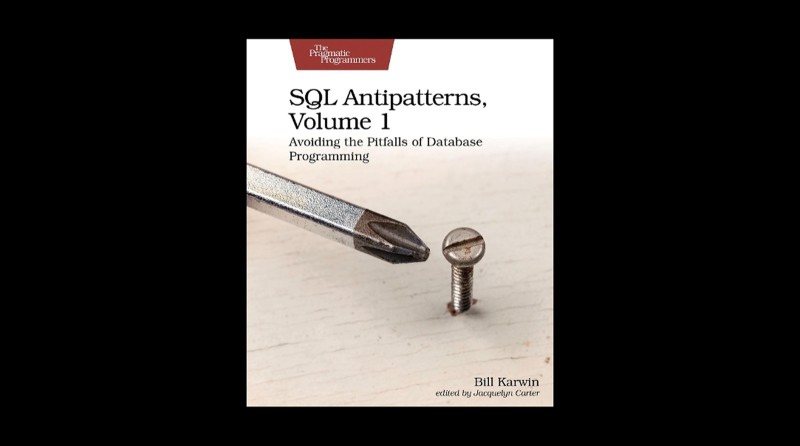
Level: junior and up.
The book is a catalog of common mistakes in working with databases. For each one: why people fall into it, when it starts to hurt, and how to do it right. The most valuable part is that the mistakes are familiar. You've almost certainly seen them in other people's projects. Maybe in your own, too.
Take "Jaywalking" — storing a list of values in a single comma-separated column: tags = 'python,sql,docker'. Convenient right up until the first request: "find everyone with the sql tag." Or EAV — a universal "entity–attribute–value" table where you can store anything. And then can't get anything out of it quickly.
The AI mistake you'll catch: ask AI to "add flexible custom fields," and there's a good chance you'll get exactly an EAV table. It looks elegant, it passes review, and a year later every report needs five JOINs.
You can practice indexes, schemas, transactions, and PL/pgSQL hands-on in our SQL course: 60 levels and 400+ tasks on PostgreSQL. A wrong query shows up immediately — the checker won't let you pretend it "works anyway."

SQL Performance Explained — Markus Winand

Level: junior and up. Price: free — the online version is called Use The Index, Luke.
The very book from my story. Thin, very concrete, and entirely about one thing: how a database uses indexes and why it sometimes doesn't. Why column order matters in a composite index. Why LIKE '%text' can't use an index but LIKE 'text%' can. Why a function around a column makes the index useless.
The AI mistake you'll catch: AI is happy to suggest "adding an index" — and often adds one the query can't use. After Winand, you can see it without even opening the query plan.
"We have a hundred times more data": storage, replication, queues
Designing Data-Intensive Applications — Martin Kleppmann
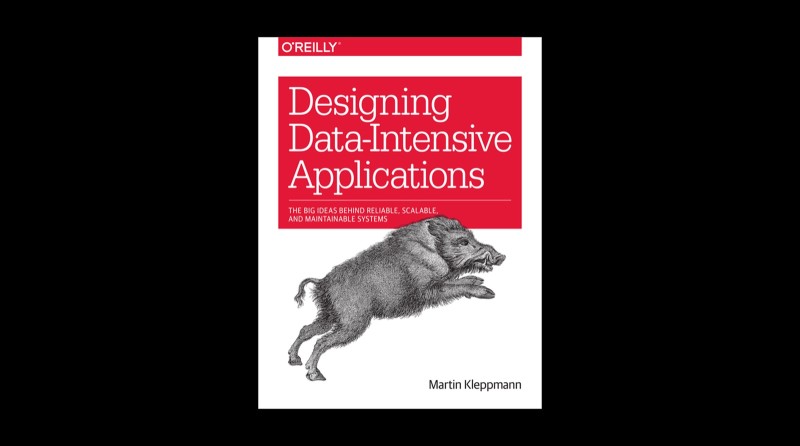
Level: mid-level and up. The second edition, written by Kleppmann together with Chris Riccomini, came out in 2026.
If you read just one book from this list, make it this one. Kleppmann explains how systems that move large volumes of data actually work: replication, sharding, transactions, queues, stream processing, consistency. And he does it without tying everything to specific databases — which is why the book doesn't go stale when technologies change.
The main thing it gives you is vocabulary and intuition. After it, phrases like "we have eventual consistency" or "let's add a read replica" stop sounding like incantations. You understand what's behind them and what you'll pay for it.
The AI mistake you'll catch: ask "the database can't keep up with reads," and AI almost always suggests replicas. Fair enough — but it rarely warns you that a user can save their profile and immediately see the old version, because the replica hasn't caught up with the primary yet. Kleppmann covers this trap in the chapter on replication.
"Agreeing on an API contract"
API Design Patterns — JJ Geewax (2021)
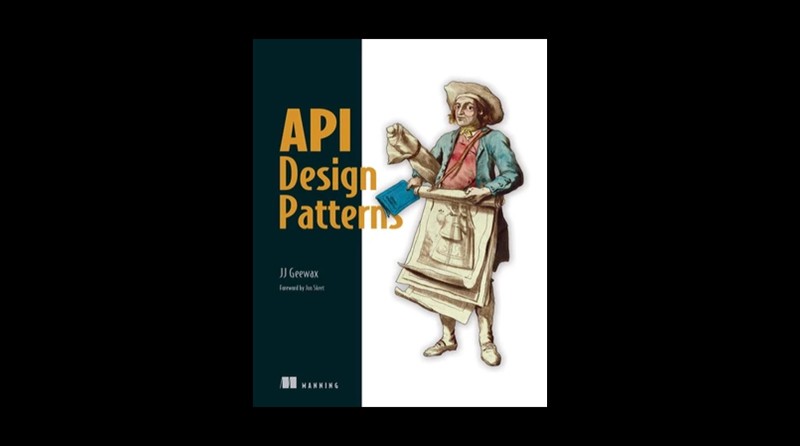
Level: junior and up.
The author spent years working on API design at Google, and the book organizes what most people learn from their own mistakes. How to name resources. How to paginate in a way that doesn't break when data changes. How to handle long-running operations. And how to make sure a repeated request doesn't create a second order.
That last point sounds boring until it happens in production. A customer submits a payment, the response gets lost on the network, the customer clicks again. If your API can't recognize repeats, they get charged twice.
The AI mistake you'll catch: by default, AI paginates with OFFSET — slow on large tables, and when new records are added, users see duplicates and gaps. And it almost never suggests protection against repeated requests on its own.
"Monolith or microservices"
Building Microservices, 2nd Edition — Sam Newman (2021)
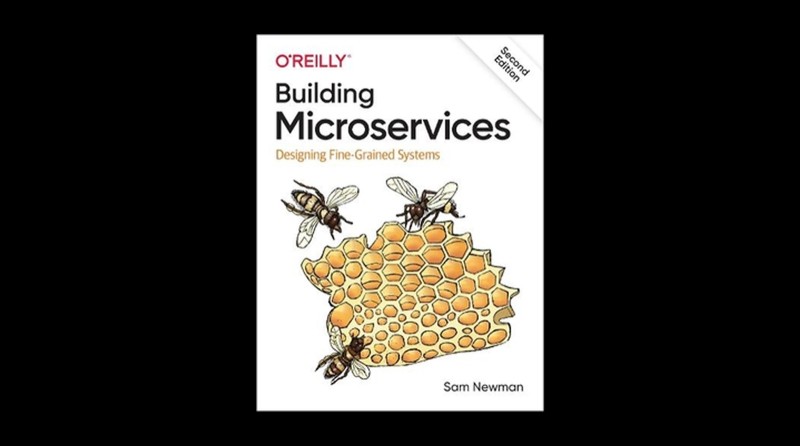
Level: mid-level.
The most honest book about microservices. Newman explains in detail how to design them, but more importantly, he isn't shy about saying when you don't need them. A recurring theme is that microservices aren't a goal but a way to solve specific problems. If you don't have those problems, you'll only get new ones.
Especially valuable is how he handles service boundaries. Badly split microservices are worse than a monolith: you still have to ship changes to every service at once — only now over the network.
The AI mistake you'll catch: ask AI to design a system "with microservices," and you'll get five services that all talk to one shared database. That's a distributed monolith: all the downsides of microservices and none of the upsides.
"The service went down on Friday night": reliability
Release It!, 2nd Edition — Michael Nygard (2018)
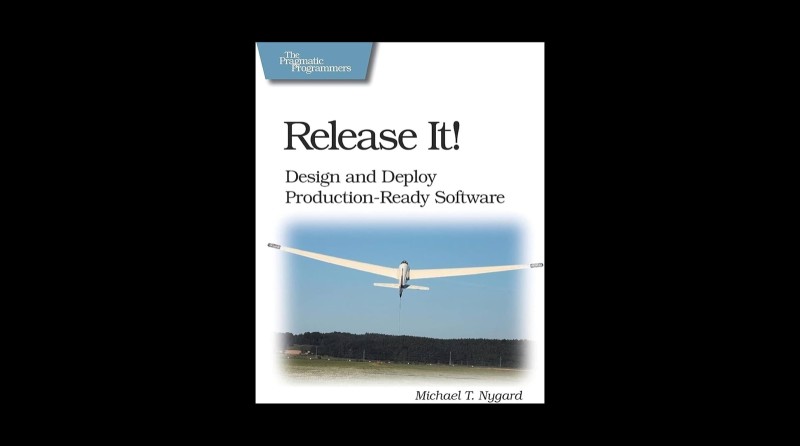
Level: mid-level, but very useful for juniors too.
A book about how systems break in production — and why it's almost always at the points where they talk to something external. Nygard starts with real incidents and then introduces stability patterns: timeouts, circuit breakers (which stop calling a service that's down), bulkheads (which keep one problem from sinking everything), and load shedding.
It reads almost like a detective story. Except at the end of every chapter, you realize the culprit is you, and the weapon is an external API call without a timeout.
The AI mistake you'll catch: the classic — requests.get(url) in Python without a timeout parameter. By default, a call like that will wait for a response forever. One hanging external service, and all your threads hang along with it. AI writes this all the time, because half the examples on the internet are written that way.
Site Reliability Engineering — Google engineers (2nd Edition, 2026)
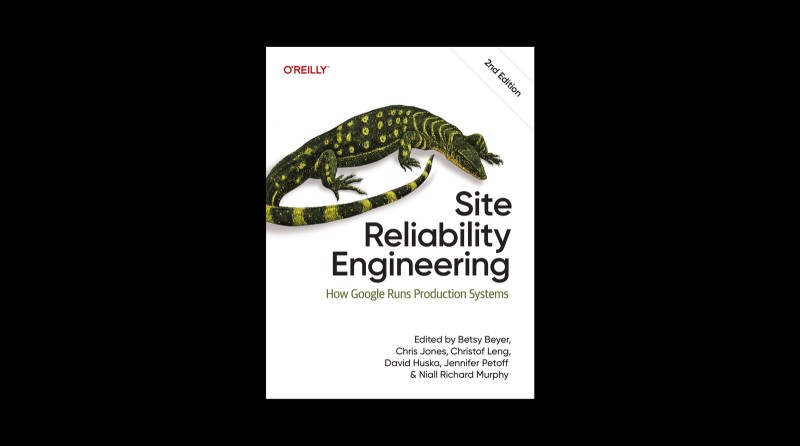
Level: mid-level and up. Price: the second edition is paid; the first (2016) is free on the Google SRE website.
How Google keeps its services alive. In September 2026, for the book's tenth anniversary, a completely rewritten second edition came out — with chapters on cloud and the impact of AI on operations. The first edition is the one that made SLOs (how many errors are acceptable), error budgets, and blameless postmortems familiar terms. It's a thick book, but you don't have to read it cover to cover: the chapters on monitoring, alerting, and incident review are useful in your very first year.
Worth mentioning alongside it: Building Secure and Reliable Systems — also from Google, also free on the same site. It's the follow-up that connects reliability with security.
The AI mistake you'll catch: ask AI to set up monitoring, and it'll suggest an alert on every 500 error. Within a week, whoever's on call stops reading notifications, and a real incident drowns in the noise. SRE teaches you to alert on what matters to users, not on every hiccup.
"Our data leaked": security
Web Application Security, 2nd Edition — Andrew Hoffman (2024)

Level: junior and up.
The book is built in three steps: how an attacker studies an application, how they attack it, and how to defend against it. The second edition adds GraphQL, cloud deployments, and other modern topics. For backend developers, the key is seeing your own code through the eyes of someone who wants to break it.
The AI mistake you'll catch: an endpoint like GET /orders/{id} that returns an order by its number without checking whose order it is. Change the number in the URL, and you're reading other people's orders. Broken access control is number one on the OWASP Top 10, and AI generates endpoints like this easily: the task "build an API for orders" says nothing about ownership.
"The system design interview"
System Design Interview — Alex Xu (Vol. 1 — 2020, Vol. 2 — 2022)

Level: juniors preparing for mid-level interviews, and mid-level devs.
The most popular book for preparing for the system design round — and for good reason. Xu gives you a four-step framework for answering and walks through real problems: a URL shortener, a news feed, a chat system, a rate limiter. Lots of diagrams, little fluff.
The chapter on back-of-the-envelope estimation is especially useful: how many requests per second, how much data per year, will it fit on one machine. Being able to estimate the order of magnitude in a minute helps far beyond interviews.
The AI mistake you'll catch: AI designs systems without numbers. It'll suggest Kafka, caching, and sharding for a service with a hundred users a day. After Xu, your first question will be: "What's the load?"
Plus one book for your stack
The nine books above aren't tied to a language. But every backend stack has its own classics:
- Java: Joshua Bloch's Effective Java (3rd edition, 2018) and Brian Goetz's Java Concurrency in Practice. The second one is old, but nobody has written anything better about concurrency in Java since.
- Python: Luciano Ramalho's Fluent Python (2nd edition, 2022) — how to write Python the way the language intends, not like Java with different syntax.
- Go: Jon Bodner's Learning Go (2nd edition, 2024) — idiomatic Go for people coming from another language.
Most of these books are available in translation. But if your English allows it, read the originals: you'll get used to the terms the whole industry speaks in along the way.
How to read so it actually sticks
The biggest mistake is reading technical books like novels: cover to cover, on the train, without a computer. A month later, all that's left is a vague feeling of "that was useful" and zero skills.
Here's what works instead:
- Read for a problem. A query is slow — you open Winand. You're designing an API — Geewax. A book read against a live problem sticks many times better.
- Reproduce it hands-on. One chapter on indexes isn't enough — create a table with a million rows and look at the query plan before and after.
- Use AI as a sparring partner. Ask it to write a solution, then find the mistake from the chapter you just read. It's the best code review exercise you could invent.

This is where the main idea of the whole list shows. AI writes code really well — but it writes it based on examples from the internet, and the internet is full of queries without indexes, calls without timeouts, and endpoints without access checks. Someone who knows where to look will review generated code in a minute and fix it. Someone who doesn't will ship it to production and find out about the problem in the team chat.
Books give you exactly that knowledge. But they don't give you the skill — the skill comes when you write, break, and fix things yourself.
Where to get practice
If you're just heading into backend, start with a language and a database: Java, Python, or Go — plus SQL. Thousands of tasks with instant checking, where every mistake shows up right away instead of a month later in production.
If you want to go into backend in a structured way, with a mentor and portfolio projects, there's Java University: live classes, code review, and career support.
And if you prefer books that train your thinking rather than your technique, we have a list for that: What Programmers Read: 15 Books That Train Your Head, Not Your Syntax. It pairs well with this one.
FAQ
Which book should a backend developer read first? If you're a junior — Bill Karwin's SQL Antipatterns and Markus Winand's free Use The Index, Luke: almost every backend runs into the database. If you're already mid-level — Martin Kleppmann's Designing Data-Intensive Applications.
Which backend books can you read for free? Use The Index, Luke (the online version of SQL Performance Explained), plus the first edition of Site Reliability Engineering and Building Secure and Reliable Systems from Google — both free on sre.google.
What should I read before a system design interview? Alex Xu's System Design Interview — both volumes. For a deeper understanding, Designing Data-Intensive Applications.
Do I need to read books if AI writes the code? Yes — even more than before. AI generates code from patterns on the internet and repeats common mistakes: queries that don't use indexes, calls without timeouts, endpoints without access checks. To catch them in review, you need to know how it should be done.
In what language should I read technical books? In the original if you can: the terms in documentation, interviews, and teams are in English. But if English is still getting in the way of understanding the ideas, a good translation beats an unread original.
GO TO FULL VERSION