Knowledge vs Skills
Studying at university trained us to think that there are no fundamental differences between theory and practice. No, of course you understand that they are not the same thing. But you do not see a fundamental difference. Yet there is one.

Most people put an equals sign between “I know” and “I can do.” What about you—do you?
How about examples like these?
- I know that smoking is harmful, but I smoke.
- I know that McDonald’s is unhealthy, but I eat fast food.
- I know the traffic rules, but I cannot drive.
- I know that running is good for you, but I do not run in the mornings.
Very often, people mistake “I know” for “I can do.” A good example is traffic rules. If a person knows the rules and knows how to drive, does that mean they can? No. And if they think they know? Well, then why would they need an instructor when they already “know” and “can do” everything?

If you are sure you already know everything, you most likely will not learn anything else. And if you are sure you can do everything, you will not learn anything else. The thought will not even occur to you. Which means you will miss all the wonderful opportunities to learn something.
At a typical university, you are fed knowledge only, and you will have to acquire abilities/skills on your own. What do I hear? At your university it was not only theory, but also practice? OK—if you are a physics student, try to build a working steam engine model with an efficiency of at least 30%. You surely know how, but most likely you cannot do it, right?
Are you a chemist? Make black smokeless gunpowder from improvised materials. You also kind of know how, but cannot do it? A mathematician? Derive the equation of flight for an artillery shell. Do not forget to account for the shell’s shape. Material points do not fly in real life. Just as there are no spherical horses.
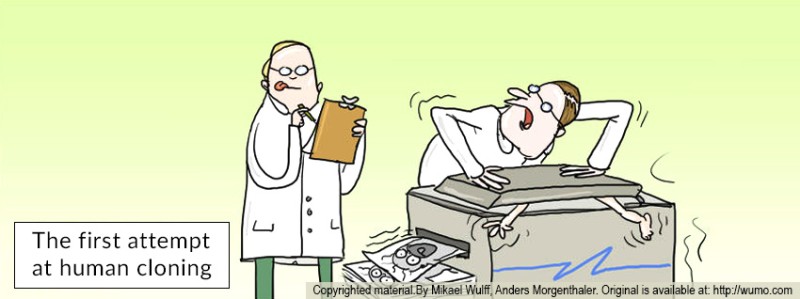
A biologist? Extract penicillin. It is mold; it is found on melons. You know how—great! Can you do it?
An economist? Build a forecast of oil price growth. Built it? Now turn $2,000 into $200,000 in a year based on your forecast. Have you ever traded on FOREX at least once? With real money? Or do you only know what it is?
International economics? Great! Where should I open an offshore company—Hong Kong, Ireland, or the USA? Why? Even if you know, you are unlikely to be able to do it right away because you have never done it before. And you do not even have a clue how it is done.
You were not taught that at university? Why do we assign tasks on topics you have not covered? Because these are tasks from real life. That is practice, and everything you most likely studied at university—spherical horses, perfect competition—does not exist in real life.
So why did we forget about marketers? What is the best way to spend $500 so that as many people as possible learn about this course? On advertising? But not only has classical advertising become outdated, but so has the concept of the Unique Selling Proposition, which was most likely presented to you at university almost as a panacea for all ills.
Forget that you “know” something. Ask yourself: what useful things can you do? What are people willing to pay money for—enough for you to live on?
So, friends, let us say thank you to such a wonderful course as CodeGym. Thanks to it, you will not only know how to program, but also be able to program. And you will also be able to get a job and, in a couple of years, earn a decent salary. One that, we hope, will be enough for a comfortable life.
Let us repeat once more: it does not matter what you know. The only thing that matters is what useful things you can do for other people—things they are willing to pay you for. The sooner you understand this, the better.
GO TO FULL VERSION